Title: Propagation and cryopreservation of helmet orchids (Corybas) in New Zealand
Applicants: Dr Karin van der Walt and Dr Carlos Lehnebach
Institutions: Ōtari Native Botanic Garden, New Zealand. Museum of New Zealand Te Papa Tongarewa.
This project will make a significant contribution to orchid conservation in New Zealand by investigating and optimising asymbiotic and symbiotic seed germination protocols for nine Corybas (helmet orchid) species. The target species are:
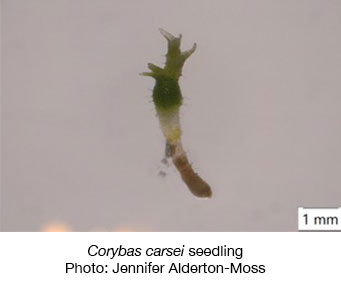
C. carsei
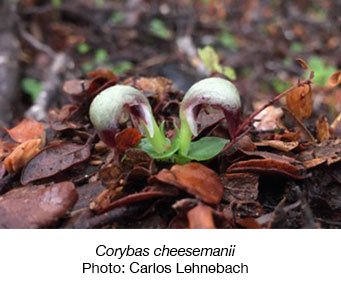
C. cheesemanii
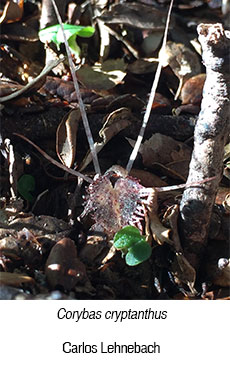
C. cryptanthus
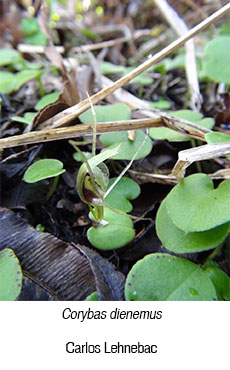
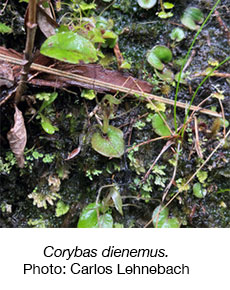
C. dienemus
C. hatchii
C. hypogaeus
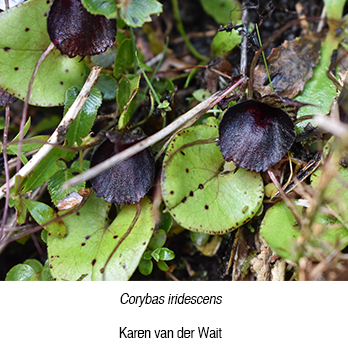
C. iridescens
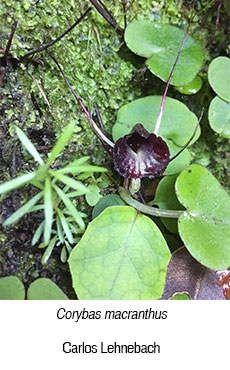
C. macranthus
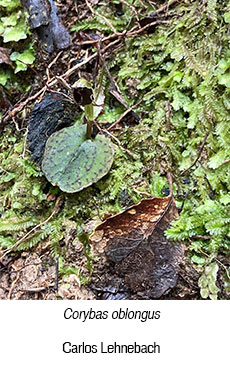
C. oblongus
Gaining a better understanding of the seed germination process will not only help us to implement restoration projects for threatened Corybas species but will also make it possible to optimise long-term storage of their seed and mycorrhizal fungi through seed banking and cryopreservation. Furthermore, because the Corybas species we will study represent species from different habitats and genetic lineages and include the only myco-heterotrophic species known so far in the genus, we expect that our findings will be equally diverse and will serve as baseline information to advance the conservation of Corybas species across Australasia.
RESEARCH OUTCOMES:
The genus Corybas is represented by more than 140 species distributed India, South China, Taiwan, Thailand, Vietnam, the Malesian region, Australia, New Zealand (NZ), and the western Pacific. Despite their relative abundance, there are no published reports on the seed germination, propagation, or restoration of any Corybas species. In NZ there are 33 Corybas species (22 species and 11 putative species that still need formal description). At least four Corybas species in NZ are classified as threatened or data deficient, meaning there is insufficient knowledge of populations to determine their threat status. In addition, Corybas species are generally narrow endemics, making them more vulnerable to extinction. The development of integrated conservation methods such as seed germination, ex situ propagation and population enhancement or reintroduction, should be prioritized.
This project investigated germination of nine NZ helmet orchids (Corybas carsei, C. cheesemanii, C. cryptanthus, C. dienemus, C. hatchii, C. hypogaeus, C. iridescens, C. macranthus and C. oblongus) through symbiotic germination (using mycorrhizal fungi) and asymbiotic germination (using nutrient rich media without mycorrhizal fungi). Corybas cheesemanii, C. dienemus, C. hatchii and C. oblongus were successfully germinated through symbiotic methods while C. carsei, C. cheesemanii, C. hatchii, C. iridescens, C. macranthus and C. oblongus were germinated through asymbiotic methods on various media types including Knudson C, BM1, Melin-Norkrans Medium, Murashige and Skoog + Sucrose and Vacin & Went Modified Orchid Basal Medium. Asymbiotic germination was overall very slow in the conditions tested, with C. carsei taking up to four years to reach a seedling stage (green).
The biggest challenge we encountered with Corybas germination was that the capsules did not behave predictably and seed from several capsules failed to germinate. We suspect that seed from some Corybas species may become dormant during development leading us to test common dormancy breaking methods such as desiccation, warm moist stratification and a combination of the first two but did not observe any noticeable improvement in seed germination (percentage or rate) within the study period.