
<< BACK TO PROJECT LIST
Project: 363/2025
Title: Investigation of the mycorrhizal fungi from unstudied orchid hosts and unexplored regions of Queensland
Applicant: Dr. John Dearnaley
Institution: University of Southern Queensland
487-535 West Street, Toowoomba Qld 4350
Investigation of the mycorrhizal fungi from unstudied orchid hosts and unexplored regions of Queensland
Serendipita fungi are common orchid symbionts in Australia and are well documented in Victoria, NSW and Western Australia. This project aims to discover additional novel Serendipita taxa from poorly sampled hosts in northern Australia including terrestrial (eg. Caladenia species) and epiphytic orchids (eg. Bulbophyllum species). At the completion of the project, multiple new species of Australian Serendipita fungi will be isolated and named using morphological, molecular and experimental approaches. This will increase both national and global knowledge of this important group of fungi and further ecological understanding of orchid symbioses. Orchid and mycological taxonomic expertise will be passed to an early career researcher, which will ensure the continuation of these skills in the next generation of Australian scientists. New, multiple, national Serendipita collections will ensure perpetuation of these fungi that will be accessible to researchers and managers working in soil bioremediation, sustainable agriculture and horticulture and plant conservation. The latter is of particular significance to the perpetuation of many threatened orchid taxa which are dependent on Serendipita fungi for in situ and ex situ growth.
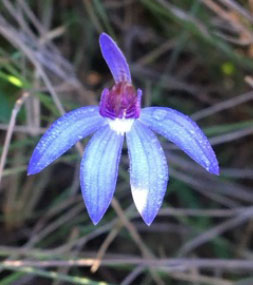
Caladenia caerulea
Photo by John Dearnaley
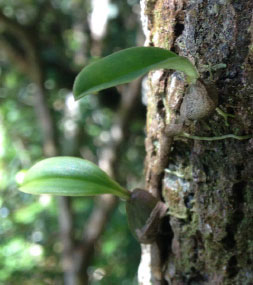
Bulbophyllum johnsonii
Photo by John Dearnaley
Research outcomes
Serendipita is a genus of orchid mycorrhizal fungi that are common symbionts of terrestrial and epiphytic orchids, as well as grasses, legumes and liverworts. Like other species of orchid mycorrhizal fungi, they are essential for the lifecycle of orchids, which rely on their fungal partner to provide the nutrients necessary for seed germination. The specificity of many orchids to only form associations with a particular fungal species has implications for orchid conservation, as the fungal symbiont must be present to ensure the germination of future generations. Species within Serendipita also show promise within agriculture for their ability to colonise a wide range of hosts and increase yields as well as bolster plant defences. Australia hosts a rich diversity of Serendipita species but many orchid taxa and regions remain underexplored. This research aimed to investigate the fungal symbionts of terrestrial and epiphytic orchids within underexplored regions in Queensland in order to increase knowledge of this fascinating group of fungi.
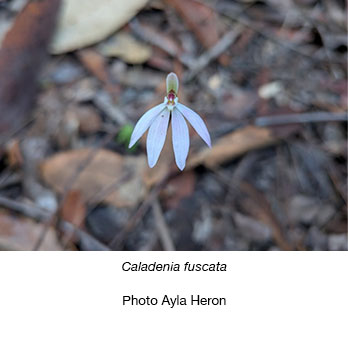
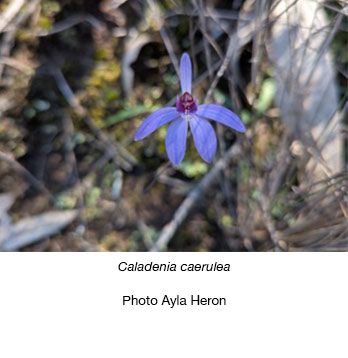
Fungi were isolated from terrestrial and epiphytic orchid roots across northern and central Queensland. A new species of Serendipitawas isolated from the epiphytic orchid Bulbophyllum radicans which was found growing on Mischocarpus exangulatus in the Wet Tropics of Queensland. The isolate was classified according to its molecular and taxonomic features and a sample was provided to the Queensland Plant Pathology Herbarium to ensure accessibility to researchers and managers working in soil bioremediation, sustainable agriculture and plant conservation. The distribution of Serendipita secunda was found through this research to extend to the Central Highlands of Queensland and its known host range was found to include the terrestrial orchid Caladenia fuscata. These findings have increased knowledge of endemic Serendipita taxa and have contributed to our understanding of the distribution and diversity of orchid mycorrhizal fungi.