<< BACK TO PROJECT LIST
Project: 371/2026
Title: Unravelling the specialised pollination system of threatened midge orchids: tiny flies, injured bugs and ecological insights for conservation
Applicant: Brett O’Keeffe (PhD Candidate)
Institution: The University of Sydney
Project Outline:
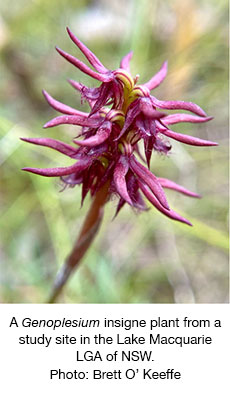
Genoplesium (syn. Corunastylis), commonly known as midge orchids, is one of Australia’s most threatened terrestrial orchid genera. About 40% of its endemic species are classified as vulnerable, endangered, or critically endangered. Major threats include habitat loss from urban development and disturbance from the maintenance of roads, fire trails, and power-line easements. Limited knowledge of their pollination, including pollinator identity and the floral traits that attract them, is also a key impediment to effective conservation.
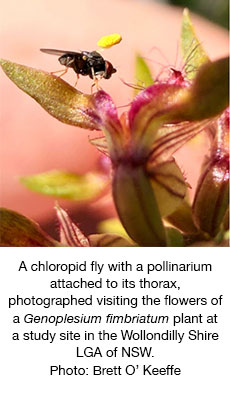
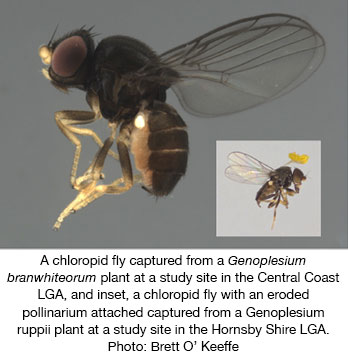
Recent research, as part of my honours work, shows that tiny grass flies (Diptera: Chloropidae) are the primary pollinators, and that the flowers of several Genoplesium species appear to attract these flies by chemically mimicking the odours of alarm pheromones and defensive secretions from injured insects captured by predaceous arthropods, such as spiders, which indicates a kleptomyiophilous pollination strategy. However, we lack detailed information on the ecology and life history of the Australian chloropid fauna, and the olfactory cues that attract them to midge orchid flowers. An improved understanding of midge orchid pollination can support the conservation of threatened and endangered species.
This project, therefore, aims to further investigate the pollination system of midge orchids, comparing threatened and non-threatened species to generate ecological insights that support the conservation of threatened species. During my research, I expect to identify the pollinators of several midge orchid species, and to uncover the diversity, life histories and ecologies of these pollinators within midge orchid habitats. I also expect to identify the key floral volatiles that attract these pollinators to midge orchid flowers, and to develop and test synthetic attractant lures for field applications based on these key volatiles, which could be used to assess pollinator presence when evaluating habitat suitability for potential plant translocations, or to enhance pollinator visitation and increase pollination success.