<< BACK TO PROJECT LIST
Project: 350/2023
Title:
A Foundational Dataset for the Future of Orchid Taxonomy in Australia
Applicant: Dr Heidi Zimmer
Institution: Centre for Australian National Biodiversity Research, CSIRO Black Mountain Site, Clunies Ross St, Acton 2601.
A Foundational Dataset for the Future of Orchid Taxonomy in Australia
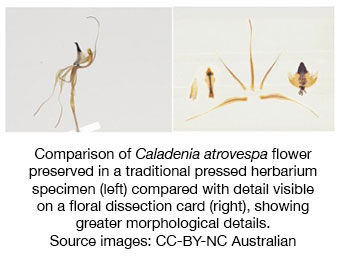
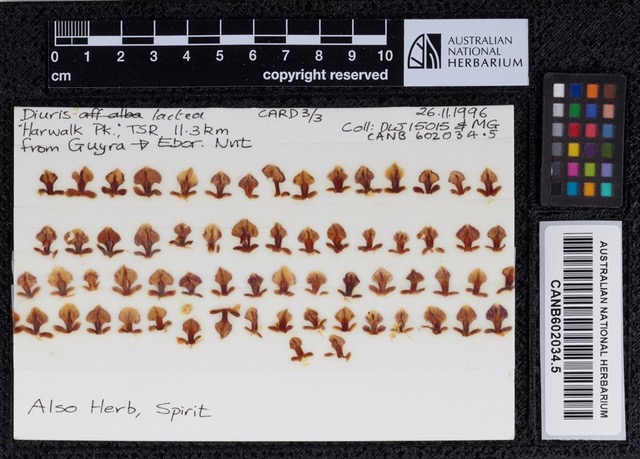
A little-known ‘special collection’ is held in a room at the Australian National Herbarium. This collection consists of 30,000 floral dissection cards which encapsulate the orchid diversity of Australia in exquisite and unique detail. These floral cards are the manifestation of decades of taxonomic research into the orchid flora of Australia by Mark Clements and David Jones.
This project seeks to curate and digitise this incredible floral card collection, making it available, open access on the internet. This project will enable further advances in our understanding of Australia’s orchid diversity in two ways. Digitisation of the collection will elucidate for researchers worldwide, a level of detail in orchid floral morphology which is typically lost in pressed herbarium specimens (with delicate flowers becoming squashed and distorted), providing a vast resource to jump-start research into orchid species delimitation. Second, digitisation of the collection will result in the addition of up to 30,000 previously uncatalogued, expert-verified species occurrence/location records to biodiversity databases, making them available for applications from threatened species extinction risk assessment to land management planning.
PROJECT OUTCOMES:
Funding from the AOF has enabled significantly increased accessibility for the ANH orchid floral dissection card collection – and the detailed records of morphological diversity that it encapsulates. Moreover, thousands of new occurrence records have been added to online biodiversity databases. The availability of these images creates new opportunities for collaboration and research, from students to conservation managers, especially those working on the issues surrounding species delimitation. Thirty percent of the collection (approximately 7500 cards) has now been curated, databased and imaged—and this serves as a critical lever for mobilizing future funding. We are actively pursuing additional avenues for funding to ensure continued progress and complete digitisation of this resource.